IDS 028
Effect of Temperature on Active Ingredient in Pharmaceutical Manufacturing Process
JMP platforms and statistical methods
Graph Builder:
Scatter plot, linear and polynomial regression
Fit Y by X:
Linear and polynomial regression
Objective
Use linear and polynomial regression to describe the relationship between temperature and the amount of active pharmaceutical ingredient and impurities
Problem statement
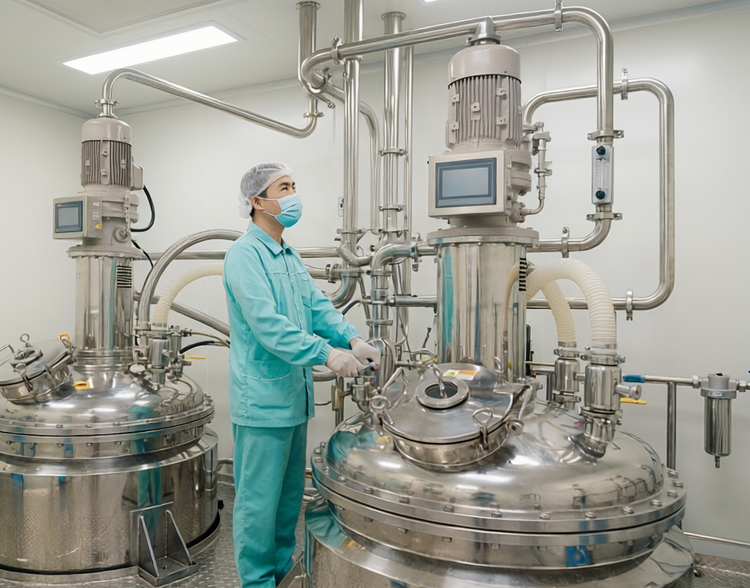
Manufacturing pharmaceuticals requires the control of a wide array of ingredients, equipment, and process conditions. Temperature plays a critical role in the manufacturing of pharmaceutical drugs, influencing various stages of production from raw material handling to final formulation and storage. During the synthesis of the active pharmaceutical ingredient (API), precise temperature control is vital for a process to consistently produce the desired API with very minimal amount of impurities.
A process engineering team at a pharmaceutical company is working on establishing conditions to scale-up production of a new drug formulation. To understand the effect that temperature at one of the process stages has on the amount of API, a pilot run of the process was planned. The target API for this product is 350 +/-2.5 mg/mL. The engineering team has decided to test six different temperatures (125 oC, 127.5 oC, 130 oC, 132.5 oC, 135 oC, 137.5 oC, 140 oC). The experiment was conducted as follows:
The process was set at the lowest temperature of 125 oC, and two batches were produced. The API was measured for each batch. The process was then set to 127.5 oC with two batches of formulation run. The temperature was increased at each step by 2.5 oC until the two batches were produced at the highest temperature of 140 oC. This part of the experiment took an entire day to complete. The next day, the process was set at the highest temperature of 140 oC, with two batches produced. The temperature was lowered at each step by 2.5 oC until the process was run at the lowest temperature of 125 oC.
This experiment resulted in having API measured for four separate batches at each temperature level. In addition, the amount of impurities for each batch was also measured for a product that requires impurities levels to be below 0.1%.