The science of Eve: Rethinking human evolution through the female body
Book review: Eve by Cat Bohannon
Anne Milley
March 10, 2026
4 min. read

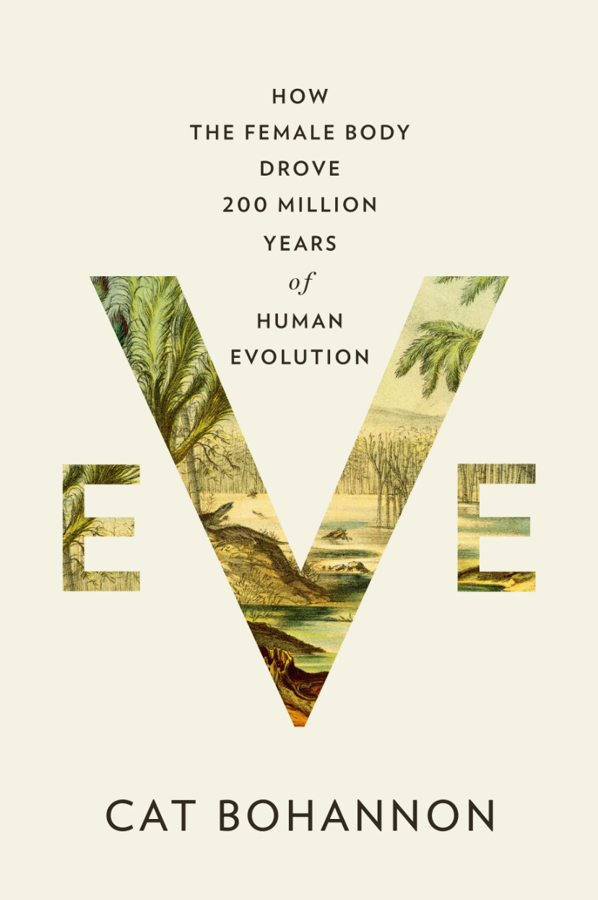
In a similar vein as Caroline Criado Perez’ award-winning Invisible Women: Exposing Data Bias in a World Designed by Men, and Lucy Cook’s critically acclaimed Bitch: On the Female of the Species, Cat Bohanan’s best-selling, award-winning book, Eve: How the Female Body Drove 200 Million Years of Human Evolution, further highlights the importance of studying the female body and asking questions historically not asked.
Charles Darwin cast a long shadow, and in the context of his Victorian times, viewed females as passive and less interesting to study. Many questions worthy of study haven’t been part of the historical narrative. Thankfully, scientists curious about the under-studied female are asking some brilliant questions and enlightening us.
Eve is the book my JMP Women in STEM book club group is currently discussing, and it is fascinating. Each chapter follows one of our traits back to its evolutionary origins, or “Eves,” a structure inspired by our taxonomy:
- As mammals, we lactate.
- As placentals, we have a uterus to birth live young.
- As primates, we have color vision and a range of hearing.
- As hominins, we walk on two legs and have large brains, etc.
The author asks these questions: “Are there ways this trait affects us especially? Is there new research that’s challenging our assumptions about this trait, and thereby about all of humanity?” The result is a deep and wide exploration of the profound impact women’s bodies have had on human evolution. The details in the extensive footnotes, endnotes, and bibliography reflect the fact that it took the author a decade to write this book while also completing her Ph.D. and raising her two children—all impressive feats!
Milk as a verb, not a noun
The benefits of breastfeeding for developing immune systems are widely known. As someone who was determined to nurse my child, I read several books about breastfeeding (much of what we learned decades ago was funded by formula companies trying to replicate breast milk, yet they cannot fully do so). In the first chapter, we read that “Mothers’ bodies tailor milk’s contents for the needs of their offspring through a complex communication system…. Milk is something we do as much as something we make.” And apparently, even men can lactate! And while not everyone is able to successfully nurse babies, we are amazingly resilient when breastfeeding isn’t an option.
The price of adaptation
The resilience and fragility of human life are recurring themes as the author reflects on our evolutionary history. Another theme in the first and later chapters is the occurrence of evolutionary tradeoffs. Breastfeeding can extend the lives of our offspring and give them stronger immune systems (and provide other benefits to those who breastfeed), yet there is a cost: mammary tissue in all animals can become cancerous, and it can spread to nearby organs often before the cancer is even noticed.
Another fascinating bit of evolutionary history is the origin of placentas. They are actually not “human” tissue. They likely originated from an ancient retrovirus that allows the exchange of nutrients, waste, and gas between maternal and fetal blood by attaching to the uterus without being destroyed by the mother’s immune system.
Bohannon weaves in many interesting facts and stories, comparing and contrasting different abilities in males and females. For example, as many as 12 percent of human females may be born with the ability to perceive 100 million colors, having four instead of the usual three cone cells in their retinas (enabled by a gene on the X chromosome). Strangely, this ability doesn’t fully develop in these humans to the extent it does in other tetrachromats as our environment doesn’t encourage it.

Rethinking strength
Other examples comparing physical abilities of males and females set the stage for a remarkable story about Captain Kristen Griest, the first woman to complete the Army’s Ranger School and later become the first female infantry officer in the U.S. Army. Because of differences in male and female bodies—the amount of fast- versus slow-twitch muscle fibers, explosive versus enduring strength, and more—the author writes that “…female bodies may bring key advantages to combat groups. If you control for height, weight, and body fat percentage…comparing male and female soldier strength may come out a wash…” But a mixed-sex combat group may collectively bring a more diverse and valuable set of strengths.
So many stories like this in Eve remind me of the Paul Harvey radio program, The Rest of the Story. Cat Bohannon so skillfully narrates fascinating, little-known facts and stories about female contributions to human evolution that it really feels like the closing line to that radio program, “And now you know the rest of the story.” I highly recommend this book to anyone interested in the many sciences involved in better understanding human evolution.