AEROSPACE ANALYTICS
An efficient approach to visualizing where and why structural anomalies occur across the flight envelope to reduce variation, instability, and risk.

LIVE WEBINAR
Session 4
Test Fewer, Learn Faster: Active Learning and Modern Experimentation
Date: Thursday, August 6
Time: 1:00 p.m. ET | 10:00 a.m. PT
Duration: 30 minutes
Registration: FREE
Level: No prior knowledge of advanced modeling required
When time is the most important governing factor, running every single simulation is not only expensive but can delay the hitting of key milestones. The faster – and less expensive – route to accomplish the mission on time is to model the factors to reduce the number of simulations needed. See how we are able to reduce six-factor, 648-all-possible-runs simulation to 36 simulations with 95% confidence.
Reduce test burden and accelerate learning through structured experimentation.
Whether doing simulation or real-world experimentation, see methods for acquiring the most information in the fewest test runs. We cover a range of design of experiments techniques for rapidly screening factors (even hundreds of them), as well as how to build predictive models for process optimization and trade-space analysis. Using Bayesian optimization methods, we show how to leverage your goals and existing data to rapidly find improvements when data are expensive to acquire.
Examples include:
- Reanalysis of a simulation with 648 runs (all possible combinations of six-factors), choosing the best 36 runs (<6% of total) to predict the remaining 612 runs with 95% accuracy. See how to build fast surrogate models of long-running simulations.
- Building a 100-factor simulation across 10 subsystems with only 60 runs!
- How covering arrays with only a few hundred or thousand simulations/runs can test all possible three-way or four-way combinations out of 80 million!
- Active learning with Bayesian optimization that shows how to combine response goals with existing data (or sparse new data) to find the next best run to improve your process.
- How to sequentially run experiments, especially simulations, to reduce HPC compute cost and time.
Please join us to learn how leading companies use these techniques to reduce development time, lower risk, and bring innovative products to the market faster.
About the presenter
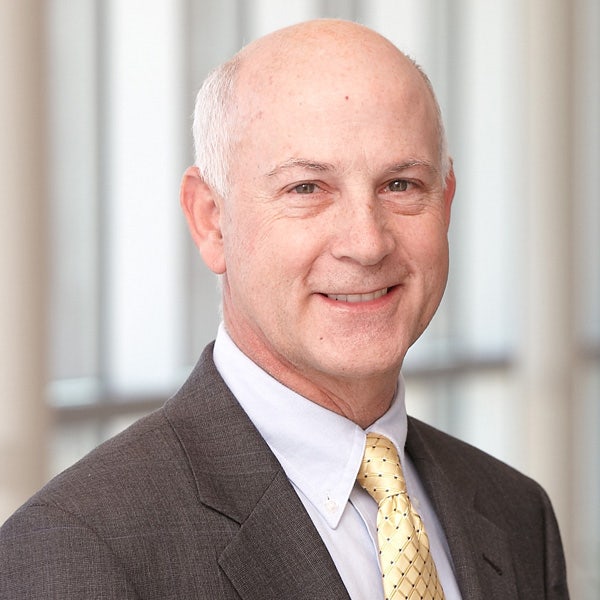
Tom Donnelly,
Principal Systems Engineer
Tom Donnelly is a Principal Systems Engineer at JMP, where he supports users in the defense and aerospace sectors. He has been actively using and teaching design of experiments (DOE) methods for the past 35 years to speed development and optimization of products, processes and technologies. Prior to joining JMP, Donnelly worked as an analyst for the Modeling, Simulation & Analysis Branch of the U.S. Army’s Edgewood Chemical Biological Center. For 20 years, he served as a partner with the first DOE software company to enter the market, teaching more than 300 industrial short courses to engineers and scientists.