ON-DEMAND WEBINAR
DOE Case Studies with Professor Peter Goos
Presentation material taken from Optimal Design of Experiments: A Case Study Approach by P. Goos and B. Jones.
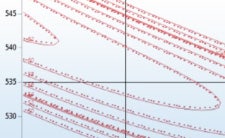
Yield maximization experiment: A response surface design in an irregularly shaped factor region
The presenter designs an experiment for investigating a chemical reaction using a full cubic model in two factors. Because many factor-level combinations are known to be infeasible in advance, the two factors cannot be varied completely independently of each other.
Stability improvement experiment: A screening design in blocks
The presenter creates a blocking design to determine which factors impact the stability of a vitamin. The process mean shifts randomly from day to day and the investigator wants to explicitly account for these shifts in the statistical model.
Wind tunnel experiment: A split plot design
The presenter designs an experiment run in a wind tunnel where it is possible to vary certain factors without shutting down the tunnel, while other factors can only be changed by shutting down the tunnel.
Laser etching experiment: A definitive screening design in blocks
The presenter creates a definitive screening design to determine optimal settings for a laser etching process.