TECHNICALLY SPEAKING

ON-DEMAND WEBINAR
Beyond a Single Equation: Applying Structural Equation Models to Real-World Problems
Data-driven decisions rely not only on trustworthy data but also on robust analytic tools that support deeper understanding. Structural equation modeling (SEM) provides a flexible, multivariate framework for analyzing complex relationships to drive higher-quality decisions.
Imagine being able to explore how critical process components influence key attributes across production stages, or map out competing theories of system behavior and have them translated into statistical models for testing and comparison.
This presentation provides a brief overview of SEM, followed by practical examples that shed light on unique insights offered by this framework, such as:
Key highlights:
- Representing complex relationships and causal theories using intuitive path diagrams.
- Modeling variables as both predictors and outcomes to assess direct, indirect, and total effects.
- Accounting for measurement error through latent variables.
- Seamlessly handling missing data.
Attendees will leave with a practical understanding of how to turn domain expertise into testable SEM models. The event concludes with audience Q&A.
About the presenters
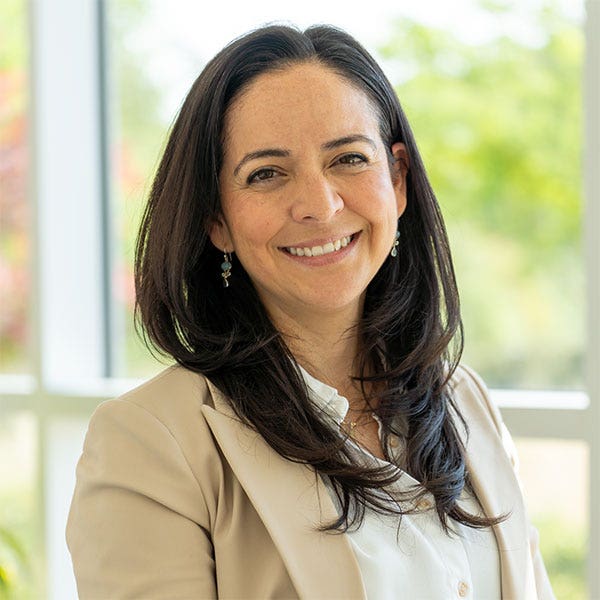
Laura Castro-Schilo works on structural equations models in JMP. She is interested in multivariate analysis and its application to different kinds of data – continuous, discrete, ordinal, nominal, and even text. Previously, she was Assistant Professor at the L. L. Thurstone Psychometric Laboratory at the University of North Carolina at Chapel Hill. Castro-Schilo has a Ph.D. in quantitative psychology from the University of California, Davis.

Prior to joining JMP, Stopp worked for Boston Children’s Hospital for seven years, where he collaborated with clinical researchers across a range of disciplines to improve health outcomes. He also served as a statistician for Deluxe Corporation, where he worked with their proprietary models for marketing campaigns to optimize customer response. Stopp holds a master’s in statistics from Pennsylvania State University and a bachelor’s in biology and psychology from the University of Nebraska–Lincoln.